
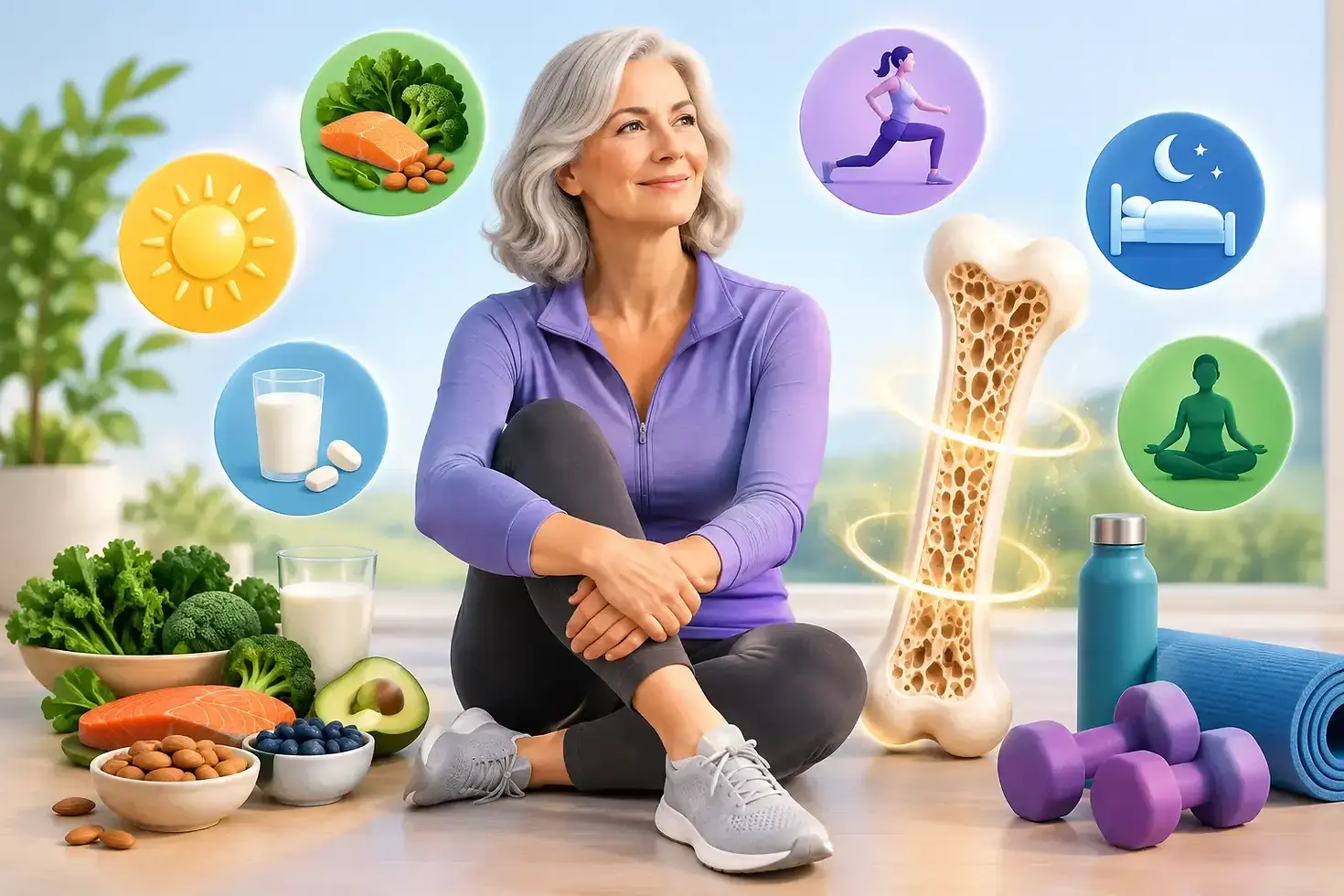
7 Ways to Support Menopause Bone Health After 50
A broken wrist after a small trip, a gradually rounded upper back, or losing a few centimetres in height can feel like something that happens to somebody else. Yet menopause bone health after 50 deserves calm, practical attention - especially when you are already dealing with poor sleep, hot flushes, changing moods and a body that may not feel familiar.
Bone loss is not a personal failure, and it is not inevitable that you will develop osteoporosis. But lower oestrogen around menopause can speed up bone loss, often without any obvious symptoms. Knowing your own risk factors gives you more choice, more confidence in GP appointments, and more opportunity to protect your future independence.
Why menopause bone health after 50 needs attention
Bone is living tissue. Your body constantly breaks down old bone and rebuilds it, but oestrogen helps keep this process in balance. As oestrogen levels fall during perimenopause and after the final menstrual period, bone can be broken down faster than it is replaced.
This is why osteoporosis is more common in women after menopause. Osteoporosis means bones have become less dense and more fragile, raising the chance of fractures. It is sometimes called a silent condition because you cannot feel your bone density reducing day to day.
Age is only one part of the picture. Your risk may be higher if a parent had a hip fracture, you have had a fracture from a minor fall, you are underweight, smoke, drink heavily, or have had early menopause. Long-term steroid treatment, rheumatoid arthritis, coeliac disease, an overactive thyroid and some other health conditions can also affect bone strength. People from every ethnic background can be affected, although risk calculations and access to assessment have not always reflected everyone equally well. If something does not feel right, you deserve to have the conversation rather than being dismissed.
Start with a realistic look at your risk
You do not need to wait for a fall to speak to your GP. Mention menopause alongside your wider health history, particularly if you have lost height, developed an unexplained curved posture, or have persistent back pain. These can sometimes be signs of small spinal fractures, though they have many other possible causes.
A GP or other clinician may use a fracture-risk assessment tool, taking account of your age, weight, medical history, medicines and family history. If appropriate, they may arrange a DEXA scan. This is a quick, low-dose X-ray that measures bone density, usually at the hip and spine. Not everyone over 50 needs a scan automatically; the right approach depends on your individual risk.
It can help to take a short written note to your appointment. Include the age you reached menopause, whether your periods stopped before 45, any fractures after a low-impact fall, relevant family history, your current medicines and any long-term conditions. A health tracker can make these details easier to gather when brain fog makes recall difficult.
Questions worth taking to your GP
Ask whether your personal fracture risk should be assessed, whether a DEXA scan is appropriate, and whether any current medication could affect your bones. If menopause symptoms are affecting your quality of life, ask whether hormone replacement therapy, often called HRT, is suitable for you and how it may affect bone health. You can also ask if blood tests are needed to investigate another cause of bone loss. The aim is not to demand a particular test or treatment, but to have an informed, shared conversation.
Build bone strength through movement
Movement is one of the most useful things you can do for your bones, muscles, balance and confidence. Bones respond to weight-bearing activity - activity where you support your own body weight - and to resistance work that asks muscles to pull against bone.
Brisk walking, stair climbing, dancing, hiking and tennis can all be weight-bearing. Resistance training might involve bodyweight exercises, resistance bands, weights, or gym machines. Balance work matters too, because preventing falls helps prevent fractures. Tai chi, yoga adapted to your ability, and simple exercises that challenge your balance can be valuable.
The best plan is the one you can repeat. A few walks each week plus two strength sessions is a meaningful place to begin. If joint pain, pelvic floor symptoms, fatigue or an old injury makes exercise daunting, start gently and seek support from a qualified physiotherapist or exercise professional. High-impact exercise is not right for everyone, particularly if osteoporosis or spinal fractures have already been diagnosed.
Eat for bone health without chasing perfection
Calcium provides a key building block for bones. In the UK, adults generally need around 700 mg a day, and many people can meet this through food. Dairy foods are useful options, but they are not the only ones. Calcium can also come from fortified plant alternatives, tinned fish with edible bones, tofu made with calcium, beans, tahini, some leafy greens and fortified breakfast cereals.
Vitamin D helps your body absorb calcium. During autumn and winter, the UK advice is for adults to consider a daily supplement containing 10 micrograms of vitamin D. Some people may benefit from taking it all year, including those who spend little time outdoors, cover most of their skin outside, live in a care home, or have darker skin. Ask a pharmacist or clinician if you are unsure what applies to you, especially if you have kidney disease or take prescribed supplements.
Protein matters as well. Muscle helps support the skeleton, and adequate protein supports muscle maintenance as we age. This can be fish, eggs, yoghurt, pulses, chicken, tofu, lean meat, nuts or other foods that suit your budget, culture and preferences. There is no need to overhaul your whole diet overnight. Adding yoghurt to breakfast, choosing fortified soya milk, or including beans in a familiar meal are practical changes that count.
Be clear-eyed about alcohol, smoking and supplements
Smoking is linked with poorer bone health and earlier menopause. Stopping can feel hard, particularly when stress is already high, but support is available and every attempt matters. Regular heavy alcohol intake can also weaken bones and increase fall risk. If drinking has become a way to manage sleep, anxiety or loneliness, that is a sign to seek compassionate support, not judgement.
Supplements can be helpful when there is a clear need, but more is not always better. High-dose calcium supplements are not automatically necessary if you get enough from food, and they can cause side effects for some people. Avoid spending money on products that promise to rebuild bone quickly. Bone health is built through steady habits, appropriate assessment and, when needed, medical treatment.
Treatment can be part of prevention
HRT can help prevent bone loss while you are taking it, particularly for women who start treatment around menopause. It may be a good option when you also have troublesome menopausal symptoms, but it is not suitable for everybody. Your medical history, age, timing of menopause, type of symptoms and personal preferences all matter.
If osteoporosis is diagnosed or your fracture risk is high, a clinician may discuss medicines designed to reduce fractures. These include treatments that slow bone breakdown and, in selected situations, treatments that help build bone. Each has benefits, possible side effects and practical considerations, so it is reasonable to ask how long you might take it, what monitoring is needed and what happens if you stop.
Do not stop prescribed osteoporosis medication or HRT without speaking to the clinician who prescribed it. Some medicines need a planned review or an alternative treatment rather than a sudden stop.
Protect your bones by reducing falls
Strong bones are only one side of the equation. Good lighting on stairs, supportive shoes, regular eye tests and reviewing medicines that make you dizzy can all lower fall risk. If night sweats or broken sleep leave you unsteady when getting up, keep a light and clear route to the bathroom nearby.
A sudden severe back pain after bending or lifting, a hip injury after a fall, or inability to put weight through a leg needs urgent medical assessment. It is always better to get a suspected fracture checked than to try to push through it.
Your bones are part of the life you want to keep living: carrying bags, dancing at family celebrations, travelling, working, playing with grandchildren, and moving through the world on your own terms. One small action this week - booking that appointment, adding a strength session, or checking your vitamin D routine - is a caring place to begin.


Comments